

Phoenix, AZ · What we treat
TMJ and TMD in Phoenix
The jaw is a joint with a disc, a capsule and hard-working muscles, and it responds to the same cause-first evaluation and hands-on treatment as any other joint, here in Phoenix.
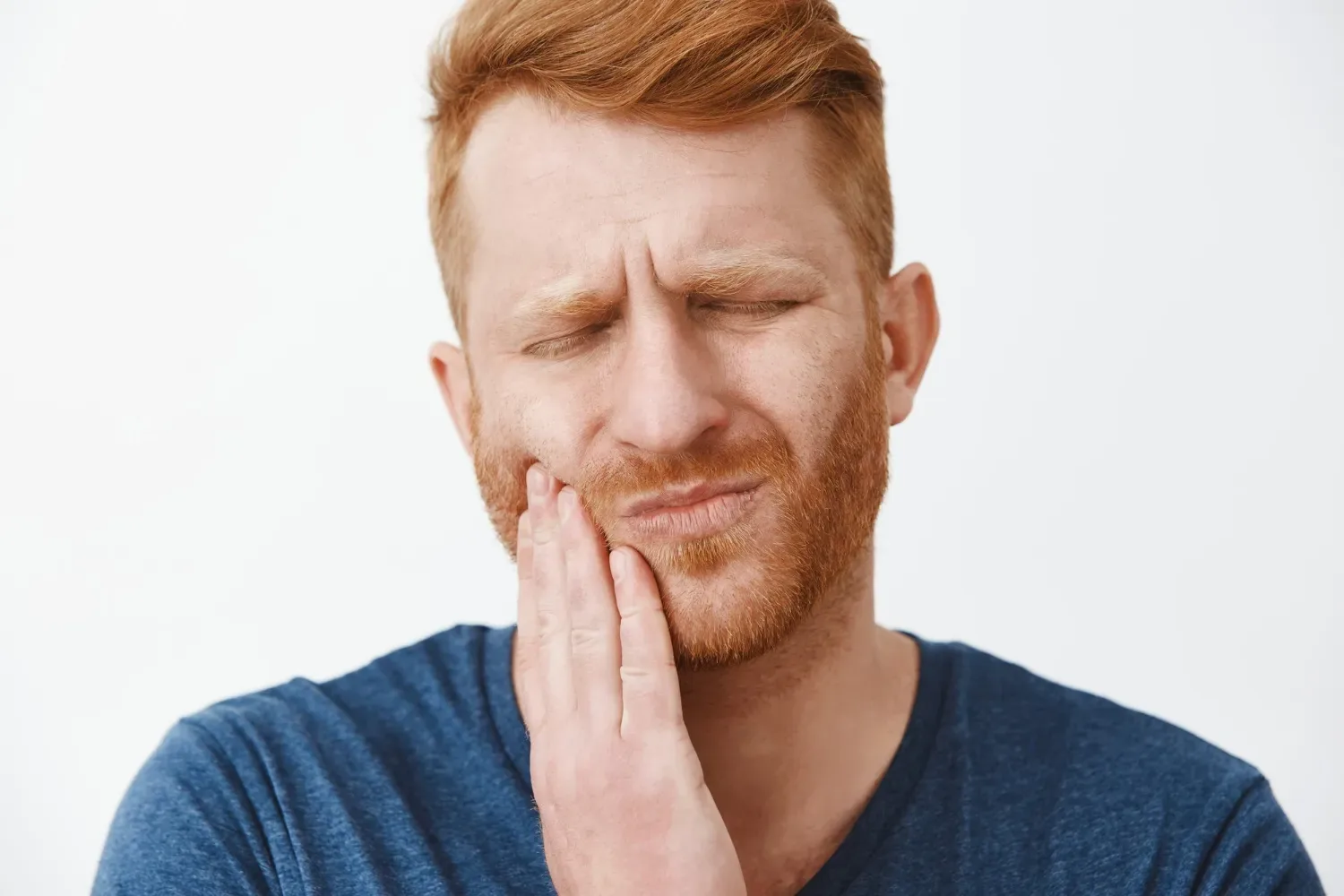
Why does TMJ and TMD happen?
Five drivers cover most of it, and yours decides whether the plan focuses on the joint, the muscles, or the neck.
- The disc is out of sequence. When the disc sits forward at rest, the joint meets it part way through opening, which is the click, or misses it entirely, which is the lock.
- Muscles that never fully let go. The closing muscles are among the body’s strongest for their size and can brace for hours unnoticed, causing temple pain, a tired jaw on waking, and a joint that never rests.
- One side does all the work. A chewing preference, often started to avoid a sore tooth long since fixed, leaves one joint doing double duty and the other stiffening. The asymmetry shows the moment you open.
- The neck sets the jaw’s starting position. Head position changes the jaw’s resting position and the length of the muscles that move it. It is the most overlooked driver, and why treating the jaw alone often gets partial results.
- A long appointment, or a knock. An hour of wide-open dental work, or a blow to the jaw in sport or a collision, can irritate the capsule enough that the joint never quite settles.
We do not do dental work, make or fit night guards, or move teeth; if your dentist recommends a guard or procedure, follow it. We treat the joint, the muscles that drive it, and the neck’s contribution.
How people describe a jaw that is not behaving.
-
Usuallythe disc, a small cushion that should travel with the jaw, sits too far forward, and the click is the joint catching up to it. On its own it is common and not an emergency.
Why does this happen ⟶ -
Usuallythe disc did not reduce that time. Locking feels alarming but is usually mechanical, not dangerous, and worth seeing early before the joint learns compensations.
Why does this happen ⟶ -
Usuallyovernight clenching or grinding you cannot feel yourself doing. Hours of low-grade contraction in the closing muscles produce exactly this, and it is treatable at the muscle and joint together.
Why does this happen ⟶
Most people assumed this was purely dental and want to understand the joint before anything permanent is decided about their teeth. It is often mistaken for migraines, toothaches or an ear infection, since it can cause headaches, neck or face pain, ear pain, dizziness or ringing in the ears.
How do we treat TMJ and TMD in Phoenix?
The 60-minute evaluation is one-on-one with a Doctor of Physical Therapy. We review your history, measure opening and deviation, feel how the joints and closing muscles behave, and test how neck and posture change the picture. Hands-on treatment starts that visit.
Most people come 2 to 3 times a week for 4 to 6 weeks at minimum, with the same doctor. Some work is inside the mouth with a gloved hand, always explained and agreed first.
What does getting better look like?
The first wins are ordinary: a bagel without paying for it, waking without the temple ache. The click often changes last, or stays while everything else resolves, which is fine.
We track opening in millimeters, whether the jaw tracks straight, and how many mornings you wake sore. Those numbers tell the truth faster than a pain rating.
Untreated, a guarding jaw recruits help: you chew on the other side, the closing muscles brace longer, and a click becomes temple pain, poorer sleep, less opening each month, and eventually a joint that stops working properly.
The endpoint is a jaw you use without negotiating: full opening, the food you stopped ordering, and a plan for when stress brings the clenching back.
Take the load off the joint.
Hands-on release of the closing muscles inside and outside the mouth, capsule treatment, dry needling where a muscle is the driver, and a few habits to pause. Chewing usually eases before opening does.
Restore the opening and the tracking.
Joint mobilization to restore the glide, neck work and postural retraining, and controlled opening drills that teach the jaw to travel straight. Range is measured every visit.
Build control you keep.
Endurance and control work for the muscles that position the jaw and head, progressed against standards you clear. This keeps the clicking from returning in your first stressful week.
Handle the clenching.
Awareness and relaxation techniques for daytime bracing and stress-related clenching, a jaw resting position you can find, screen and desk changes, and a short program to keep. Retest before clearance.
Start with a cause-first evaluation for your jaw.
Put it in writing.
Five short questions. A real person calls you back, usually within two business hours, with times that fit your week.
The people who end up filling this out are rarely in the worst pain of their life. They’re just done working around it, done picking the errand that doesn’t require the stairs. If that’s the stage you’re at, this is the part where you stop researching and start.
Consider it filed.
A real person will call you back, usually within two business hours, with appointment times that fit your week. Keep your phone nearby.
Can’t wait? Call (602) 755-3138 ⟶Easy to find. Easy to park.
In the neighborhood, with parking by the door. Come see the place before you commit, if you like.
The clinic · Streamline Performance Physical Therapy
Get Directions ⟶Opens in Google Maps