

Phoenix, AZ · What we treat
Hip and Knee Pain in Phoenix
Stairs going down, the first mile, standing up after a movie. The two joints are rarely independent: a knee that hurts is very often a hip that stopped doing its share.
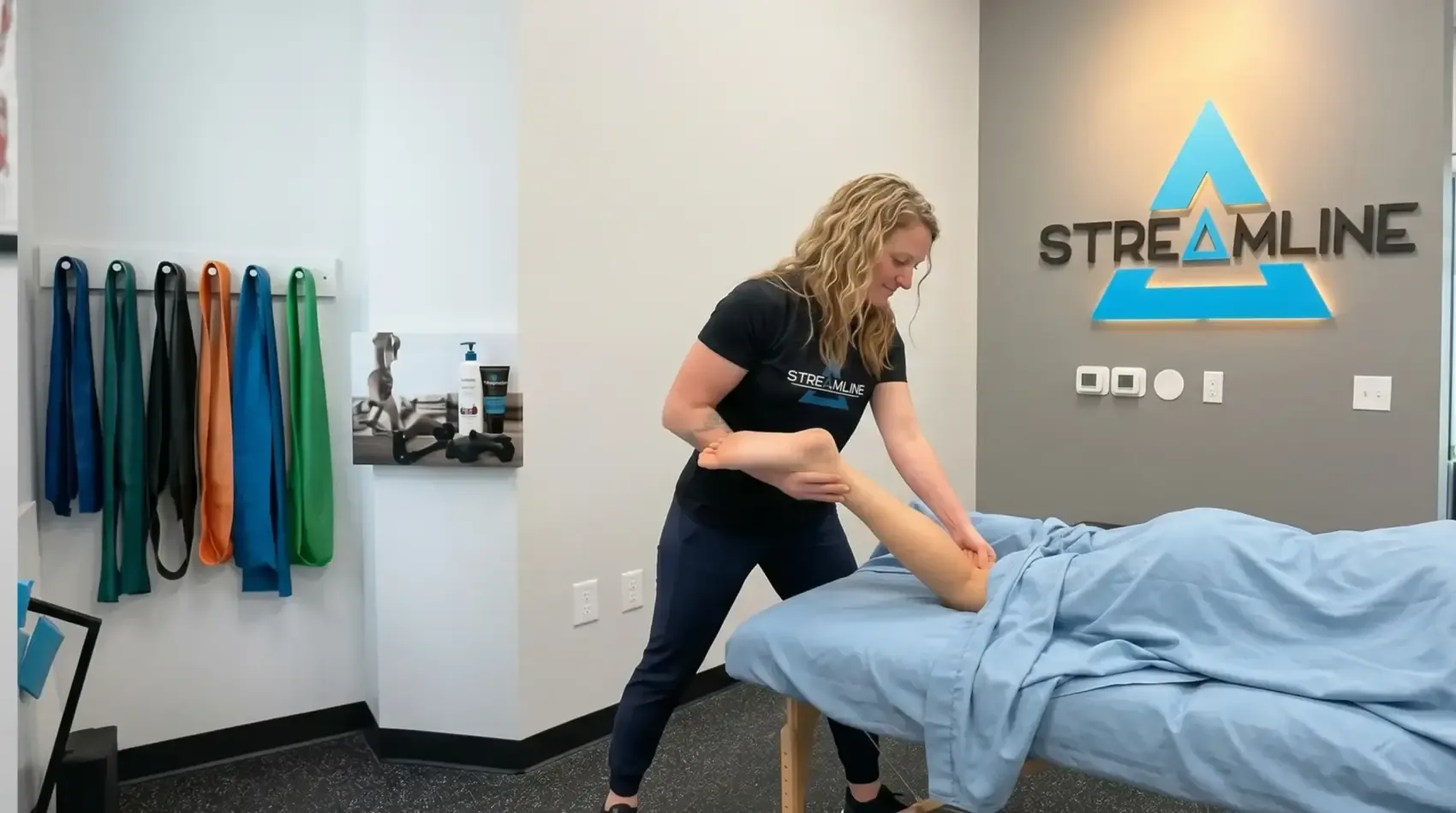
Why does hip and knee pain happen?
The hip and knee share one chain and one load. When one stops contributing, the other pays, and the one that pays is usually the one that hurts.
- The hip is not holding the leg steady. The glutes control thigh rotation and how far the knee travels inward under load. When they are underpowered, the knee drifts in on every step down, squat and stride, and gets sore while the hip stays quiet.
- Load at the front of the knee. Kneecap pain is the most common knee pain, and usually a load problem: stairs, hills, driving, a low chair. Quadriceps capacity and hip control fix it together, so treating the kneecap alone tends to stall.
- The hip joint itself. A pinch at the front in deep positions, a groin ache after sitting, a leg that feels stuck in the socket. Joint shape and how you load it both matter, and both are testable, including whether range is limited when we move your leg or only when you do.
- Tendons on the outside of the hip. Gluteal tendinopathy hurts on the outside of the hip in side lying, on stairs, and standing on one leg to dress. Crossing the legs or hanging on one hip keeps the tendons compressed. Load builds the capacity back.
- A joint with wear that has lost its buffer. Cartilage and meniscus changes show up on imaging in plenty of people with no pain. Strength around the joint and how quickly load was added matter more. Bone spurs and ligament changes can restrict motion, and running, jumping or heavy lifting without recovery lets strain outpace healing.
So the exam checks both joints. We watch you load a single leg, measure hip strength, compare sides, and check leg length, since a small difference stresses the knee and pelvis. That tells us which joint to treat first.
What people say about their hip or their knee.
-
Usuallythe front of the knee is absorbing load the quadriceps and hip should share. When the hip is not contributing, the kneecap takes the difference on every step.
Why does this happen ⟶ -
Usuallythe gluteal tendons are compressed against the bone. It is a tendon problem far more often than bursitis, and it responds to progressive load, not a cushion.
Why does this happen ⟶ -
Usuallythe hip is running out of room at the front of the socket, from the joint’s shape, your path into the position, or both. Depth is rarely the enemy. The route down is.
Why does this happen ⟶
People who book this have already rested. They want to know which joint is driving it, and something to build instead of another list of things to avoid.
How do we treat hip and knee pain in Phoenix?
Your first visit is 60 minutes, one-on-one with a Doctor of Physical Therapy: a cause-first evaluation of why it hurts, not just where. Expect to load the leg, and to start hands-on treatment that same visit.
You see the same doctor every visit, with an endpoint named at the evaluation. No referral is needed in Arizona. We are cash-pay, do not bill insurance directly, and quote the rate before you book.
What does getting better look like?
Stairs stop being an event. You get out of a low chair without planning it. Running and lifting are usually last to feel normal, and that is the expected order.
The measure that matters is single leg strength, compared side to side. When the sore leg keeps up with the other across repeated sets, the fix is likely to hold after discharge.
Left alone, the cause does not stay quiet. You favor the leg without deciding to, the other side takes more than its share, and each flare starts from a weaker leg than the last.
If your joint needs an image, an injection or a surgical opinion, you will be told. Dr. Nick Hadinger’s clinical focus includes non-operative and post-operative hip and knee work.
Calm the joint that is angry.
Hands-on treatment at the hip and knee, targeted pressure when a stiff joint or tight muscle irritates the sciatic nerve, and dry needling into the quadriceps or glutes where guarding limits movement. Stairs and long sitting are usually the first things we adjust.
Restore what is stuck.
Mobility for what is actually limiting you, most often the front of the hip and lost rotation. Range comes first, because you cannot build strength in a position you cannot reach.
Build the leg you have been avoiding.
Single leg strength against standards you clear before moving on: step downs, split positions, hinging and loaded carries, measured side to side, plus gait retraining when your walk is part of the load.
Test it, then size it to your week.
A return-to-activity check against your real demand, from a house full of stairs to a training block, then a maintenance program that fits your actual week.
Start with a cause-first evaluation for your hip and knee.
Put it in writing.
Five short questions. A real person calls you back, usually within two business hours, with times that fit your week.
The people who end up filling this out are rarely in the worst pain of their life. They’re just done working around it, done picking the errand that doesn’t require the stairs. If that’s the stage you’re at, this is the part where you stop researching and start.
Consider it filed.
A real person will call you back, usually within two business hours, with appointment times that fit your week. Keep your phone nearby.
Can’t wait? Call (602) 755-3138 ⟶Easy to find. Easy to park.
In the neighborhood, with parking by the door. Come see the place before you commit, if you like.
The clinic · Streamline Performance Physical Therapy
Get Directions ⟶Opens in Google Maps