

Phoenix, AZ · Services
Pelvic Floor Therapy in Phoenix
Leaking on a run, pressure that builds through the day, pain with intimacy, a core that has not felt right since the birth: these are common and treatable, starting with a cause-first evaluation.
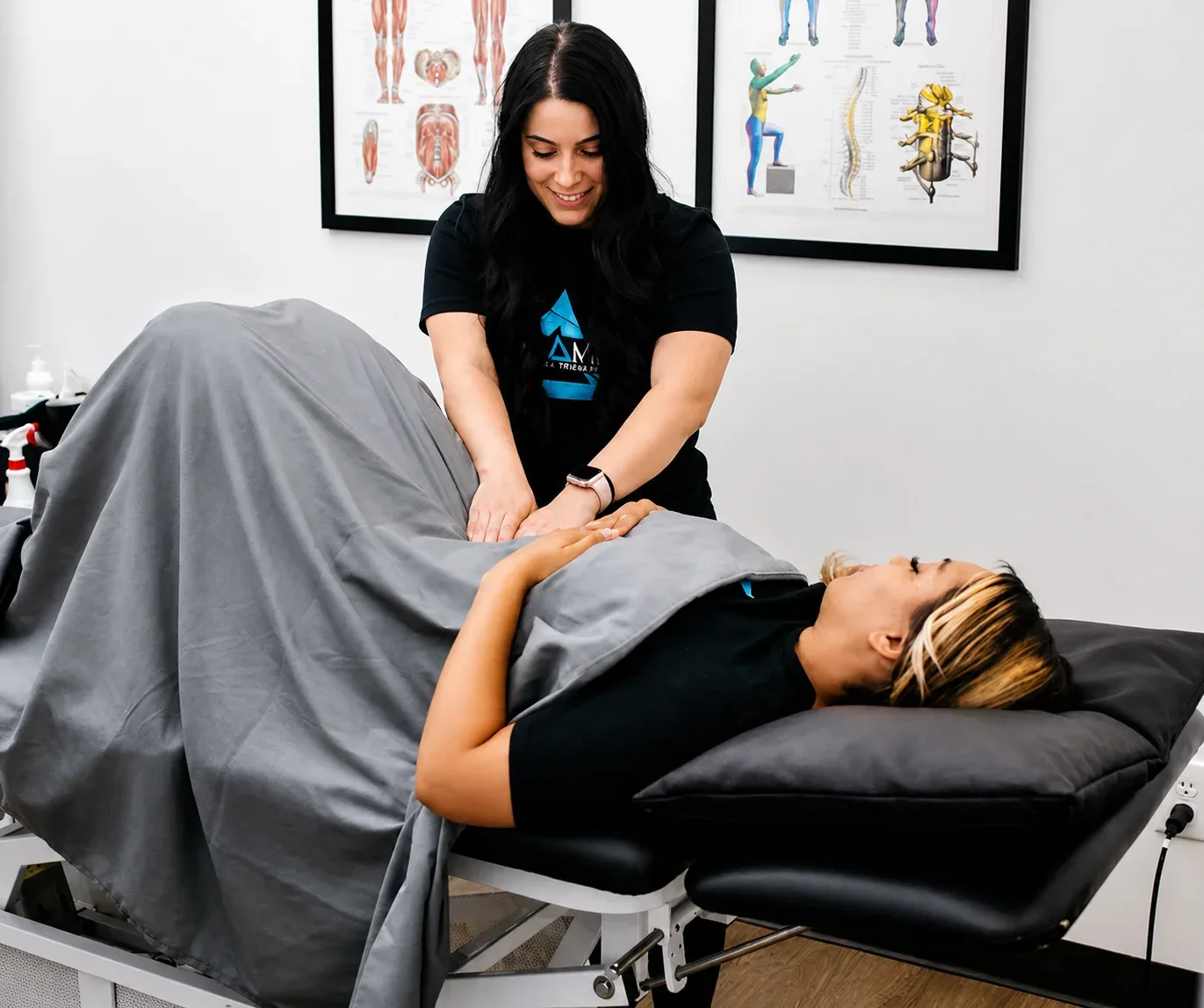
What is pelvic floor therapy in Phoenix?
The pelvic floor is a sheet of muscle across the base of the pelvis. It supports the bladder, bowel, and uterus, controls their openings, and works with the diaphragm and deep abdominals to manage pressure when you cough, lift, or run. It can become weak, tight, or poorly timed, and it responds to training.
Pelvic floor therapy is that assessment and training, led by Dr. Krista Zelizney, PT, DPT, who holds Female Pelvic Floor L1, L2a, and L2b certification and has an orthopedic background. That matters, because leaking, urgency, heaviness, and pain with intimacy are often a pressure, breathing, or hip problem that only a whole-system exam finds.
The evaluation starts as a conversation, and nothing is assessed without your agreement. Kegels are not automatically the plan: a gripping muscle does not need to grip harder. You leave with a finding, an explanation, and a plan with a named endpoint.
What does a pelvic floor therapy session look like?
The first visit is 60 minutes, one-on-one, in a private room, mostly talking and orthopedic screening: symptoms, bladder and bowel habits, breathing, hip and low back movement, and what you have stopped doing. An internal assessment is explained and consented to first, can be declined or postponed, and much useful work happens without it.
After that, sessions are physical therapy: hands-on treatment, breathing and pressure work, and progressive strength work done clothed in the gym. Two to three visits a week for four to six weeks is typical, with the same doctor each time.
Who this is for, and who it isn’t.
Good fit
- You leak or feel heaviness, urgency, or pain with intimacy, and want a specific reason.
- You are pregnant or postpartum, including years after the birth.
- Months of Kegels have not helped or have made things worse.
- You have low back, hip, or abdominal pain no one has linked to the pelvic floor.
Not the right first stop
- Anything acute and medical: unexplained bleeding, fever with pelvic pain, sudden inability to urinate, or new saddle numbness needs a physician or emergency room today.
- Anyone wanting passive treatment. There is hands-on work every visit, but results come from graded strength work here and at home.
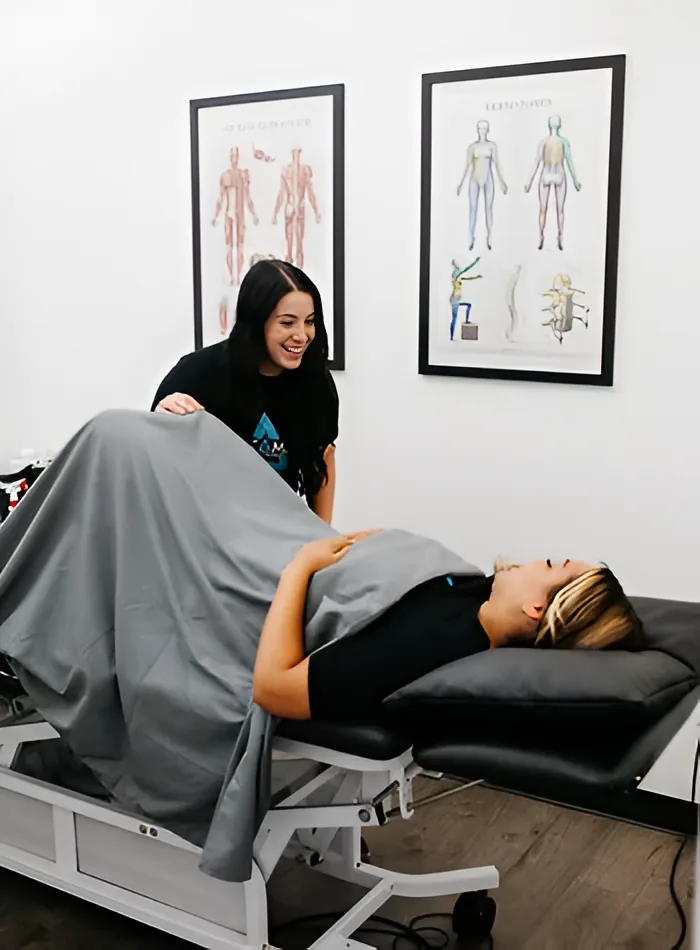
Calm the symptom and take the pressure off.
Downtraining an overworking floor, restoring breathing so the diaphragm and floor move together, and habit changes that often cut urgency within two weeks. Hands-on treatment starts at the evaluation.
Restore what stopped moving.
A pelvic floor rarely fails alone, so we address hips, ribs, low back, abdominal wall, and caesarean or tear scars, and make sure the floor can fully relax before it contracts.
Build strength you trust under real load.
Contraction timed to effort, then progressive loading: lifting, jumping, running, whatever your week holds. You clear a standard before moving on.
Make it stay fixed.
We retest before clearing you, then set a short program for your real week, so you know what maintains progress and when to check in.
“I have loved working with Krista on my pelvic floor postpartum! She was so kind and friendly at the initial visit, she really made me feel comfortable. She helped me understand the current state of pelvic floor postpartum and how to strengthen and relax it.”Audrey Y. · patient testimonial
Start with a cause-first evaluation of your pelvic floor.
Put it in writing.
Five short questions. A real person calls you back, usually within two business hours, with times that fit your week.
The people who end up filling this out are rarely in the worst pain of their life. They’re just done working around it, done picking the errand that doesn’t require the stairs. If that’s the stage you’re at, this is the part where you stop researching and start.
Consider it filed.
A real person will call you back, usually within two business hours, with appointment times that fit your week. Keep your phone nearby.
Can’t wait? Call (602) 755-3138 ⟶Easy to find. Easy to park.
In the neighborhood, with parking by the door. Come see the place before you commit, if you like.
The clinic · Streamline Performance Physical Therapy
Get Directions ⟶Opens in Google Maps