

Phoenix, AZ · What we treat
Foot and Ankle Pain in Phoenix
The first ten steps out of bed, the last mile of a walk, an ankle that never felt right after a roll: this pain gets blamed on shoes and age, but usually a tissue lost capacity or a joint stopped moving.
Why does foot and ankle pain happen?
Everything you do standing passes through here, and these tissues are springs, not cushions. Pain usually means a mismatch between what they can store and what your week asks of them.
- Plantar heel pain. The band under the arch loads every time the arch flattens and recoils. Ramp up walking, standing or hills faster than it adapts and it gets irritated at the heel attachment. Morning stiffness and the sit-then-stand pattern are the signature, and calf capacity is nearly always involved.
- Achilles irritation. The Achilles is elastic and objects to volume and speed more than weight. Runners feel it at the start of a training block, everyone else after a walking vacation. It responds to progressive load, not waiting.
- A sprain that never finished. Most sprains stop being treated once swelling goes down, about halfway. What remains is reduced range, a calf that never regained strength and untrained joint position sense, which makes the second sprain easier than the first.
- An ankle that has stopped bending. If the shin cannot travel forward over the foot, load shifts to the heel, arch or front of the joint. Common after a boot, fracture or layoff, it often improves quickly with hands-on work on the right joint; years of wear, thinning cartilage and bone spurs can also block it.
- Forefoot load and calf capacity. Pain under the ball of the foot, between the toes or at the big toe base usually reflects time spent at the end of each step and how much the calf helps. Weak calves leave the forefoot absorbing it all.
High or low arches and a foot that rolls in do affect shock absorption, but standing arch height settles nothing. Your walk, ankle bend and single leg heel raise count do; those numbers build the plan and decide when you are done.
The first ten steps, and other things people tell us.
-
Usuallythe tissue under the arch stiffened overnight and is stretched cold. It eases with warming up and returns after sitting, a pattern typical of plantar heel pain.
Why does this happen ⟶ -
Usuallythe sprain healed but your sense of joint position did not. That is trainable, and it is the biggest predictor of rolling it again.
Why does this happen ⟶ -
Usuallythe Achilles is asked for more elastic work than it has. It warms up, feels fine mid run and complains next morning, a sign the dose was too high.
Why does this happen ⟶
People who book this are past hoping a new insole will fix it. They want to know what the tissue can take, what it has been asked to take, and how to close the gap.
How do we treat foot and ankle pain in Phoenix?
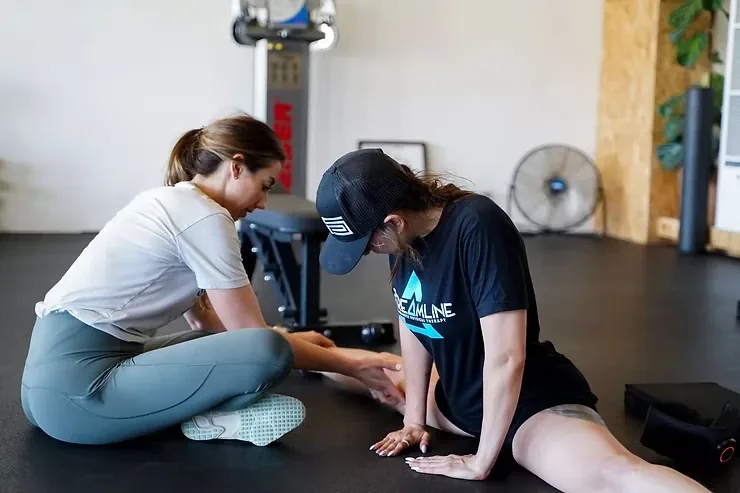
The 60-minute, one-on-one evaluation with a Doctor of Physical Therapy works out why the tissue is irritated, not just that it is. Expect to be on your feet, standing, walking and loading one leg. Hands-on treatment starts that first visit.
Same doctor every visit, and an endpoint named before the work begins. No referral needed; we are cash-pay and do not bill insurance directly, which pays for the full 60 minutes, and you get the rate first.
What does getting better look like?
The morning steps usually change first: ten sore steps become four, the soreness moves later in the day, then stops. Standing still tends to improve after walking does, which surprises people.
For an unstable ankle the change is quieter: you stop thinking about the ground, and curbs, gravel and rug edges stop being decisions. That is joint position sense returning through specific work, not time.
Left alone, you shorten your stride and walk less, the calf weakens further, and the tissue flares on smaller provocation, each round slower to settle.
A stress fracture, fracture or torn ligament (severe swelling, bruising or sharp pain after injury), gout or infection (sudden pain without clear cause), a nerve problem or anything needing imaging gets flagged at the evaluation, not six weeks in. And the plan ends at the named endpoint.
Settle the tissue that is loaded.
Hands-on work at the joint and calf, dry needling or instrument-assisted soft tissue where useful, and short-term adjustments to standing time, walking volume and footwear. Adjusting, not stopping.
Get the ankle bending again.
Mobility for what limits you, usually how far the shin travels over the foot and how freely the big toe extends. Both decide where load lands on every step.
Build the calf and the spring.
Progressive load through the calf and arch, then elastic work: heel raises, hopping, and speed. You clear a standard, usually a side-to-side heel raise count, before progressing.
Retrain the sense of where the joint is.
Balance and reactive work on uneven surfaces, then a test against your real week: a hike, a course walked, a running block, a shift on concrete. Then a program with the warm-up, stretches and footwear that keep it from returning.
Start with a cause-first evaluation for your foot or ankle.
Put it in writing.
Five short questions. A real person calls you back, usually within two business hours, with times that fit your week.
The people who end up filling this out are rarely in the worst pain of their life. They’re just done working around it, done picking the errand that doesn’t require the stairs. If that’s the stage you’re at, this is the part where you stop researching and start.
Consider it filed.
A real person will call you back, usually within two business hours, with appointment times that fit your week. Keep your phone nearby.
Can’t wait? Call (602) 755-3138 ⟶Easy to find. Easy to park.
In the neighborhood, with parking by the door. Come see the place before you commit, if you like.
The clinic · Streamline Performance Physical Therapy
Get Directions ⟶Opens in Google Maps