

Phoenix, AZ · What we treat
Sports Injuries in Phoenix
Most athletes train around pain rather than stop. The plan here runs alongside your season and finishes with a return-to-sport standard you actually clear.
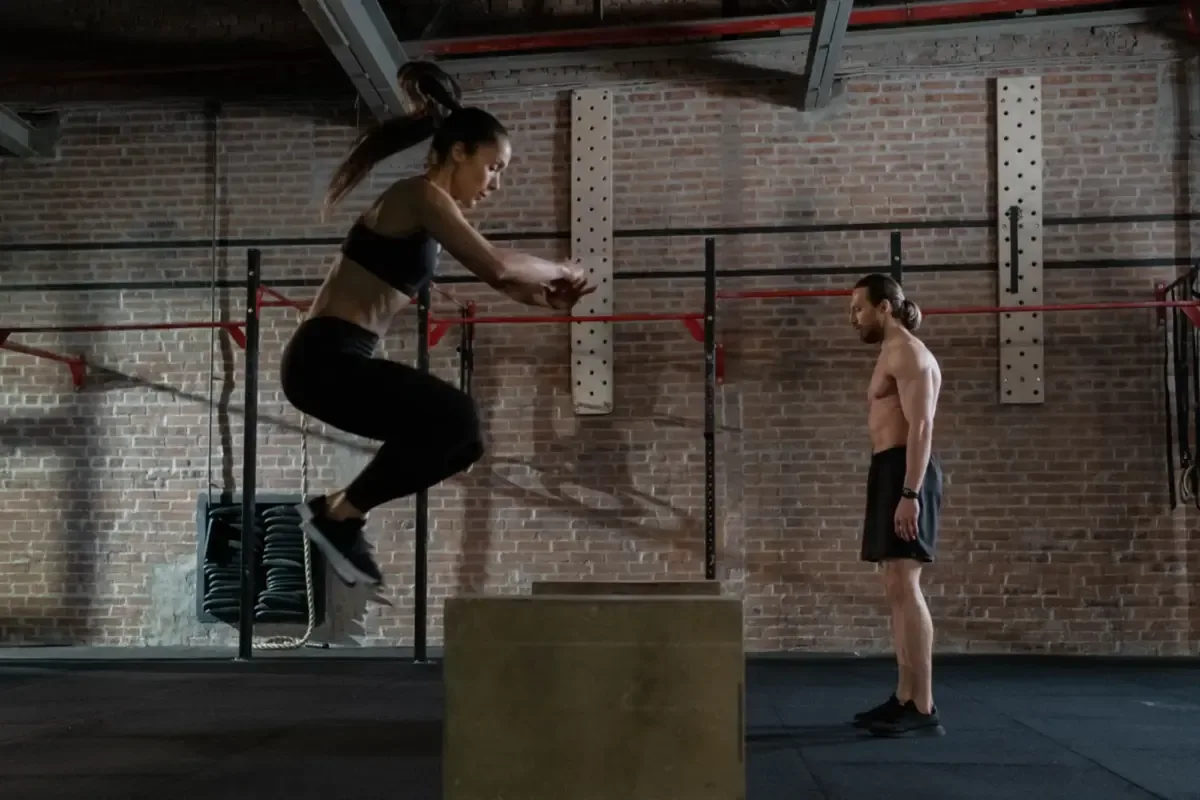
Why do sports injuries happen?
Few are true accidents. Most are a mismatch between what the tissue was prepared for and what the week asked of it.
- A spike in load. Not the total, the change: more volume, a new intensity, a competition block on a normal week. Injuries cluster in the fortnight after a sudden increase.
- A return that skipped the middle. Time off, then straight back to your old volume. Fitness returns quickly, but tendon, bone and connective tissue take much longer to catch up.
- Technique that quietly degrades under fatigue. How you move in the last ten minutes matters most, when tissue takes badly angled load hundreds more times. It is why problems appear late in sessions and seasons.
- An old injury that stopped hurting before it finished. A sprain, strain or surgery rehabbed until it felt fine. Comfort returns before capacity, so the limb goes back with an unmeasured deficit and the workaround costs something elsewhere.
- One sport, all year, at the same angles. Specialisation loads the same joints, ranges and tissue eleven months a year. Where variety is missing, it has to be put back on purpose.
The sore part is usually the reporter, not the culprit, so we ask what changed in the eight weeks before it started. Acute injuries have clear mechanisms: ankle sprains from sudden cuts or unstable landings, hamstring strains from explosive sprinting or overstretching, shoulder dislocations from collisions or forceful overhead movement, and knee ligament tears (ACL, MCL, PCL or LCL) from a pivot, hard landing or direct blow. Contact sports such as football, rugby and hockey cause more impact injuries; endurance sports such as running and swimming, more overuse ones.
How athletes talk about it before they book anything.
-
Usuallythe most common reason people wait, and how a four-week problem becomes a six-month one. A niggle that never clears is usually load or mechanics, both cheaper to fix early.
Why does this happen ⟶ -
Usuallytissue that quiets when warm and complains when cool is irritated rather than damaged. That usually means you can keep training while the dose changes.
Why does this happen ⟶ -
Usuallya capacity ceiling, not an injury, so far. If form degrades late and the same spot complains, build the quality that ran out rather than resting the part that hurt.
Why does this happen ⟶
Athletes who book this want someone who takes the season seriously, says which parts of the week are a problem, and keeps them progressing while it gets fixed, not a sheet that says stop for six weeks.
How do we treat sports injuries in Phoenix?
It begins with a cause-first evaluation, including a biomechanical look at the weaknesses and movement patterns that set up re-injury. Dr. Nick Hadinger swam Division I, raced at the 2012 US Olympic Trials, is a certified USA Weightlifting coach, belongs to the USA Swimming Sports Medicine Network, treats Team USA athletes and has worked NCAA Division I Swimming and Diving National Championships. Dr. Ryan Spencer is a board-certified Orthopedic Specialist and a purple belt in Brazilian jiu jitsu. Three strength and conditioning coaches work here, one a nine-year Team USA swimmer.
Bring your competition dates and training schedule and the plan is written around them. Visits are 60 minutes, one-on-one with the same Doctor of Physical Therapy, typically two to three a week for at least four to six weeks, with the endpoint named on day one.
What does getting better look like?
First, the day after stops being worse than the day. Then avoided sessions return one at a time, then intensity, then the movement you were most nervous about.
You will likely feel ready before the testing agrees. Tissue can feel fine at seventy per cent capacity, which is where things go wrong late in a competition.
Trained around rather than treated, most of these spread: the compensation becomes normal, a second area starts complaining, and the sport you can still do shrinks each season.
You finish with numbers you cleared, a short program that fits your training week, and a clear rule for the next time something starts talking.
Settle it without shutting the whole week down.
Hands-on treatment starts at the evaluation, with joint mobilization and deep muscle release where needed. Load drops to a tolerable dose, not zero, wherever safe, and you leave knowing which sessions stay this week.
Give back the range the sport has been taking.
Mobility for the joints and tissue actually limiting you. Sport takes range in predictable places, and restoring it lets the strength work land instead of leaking into a compensation.
Build the quality that ran out.
Progressive loading against standards you clear: strength, then balance, neuromuscular control and agility, then speed and elasticity, then your sport’s demands, with drills that mirror game-time movements and reaction time. It is the longest phase.
Leave with a standard, not a feeling.
Return-to-sport testing before sign-off, including side-to-side comparisons where a limb is involved, then a maintenance program sized to your real training week.
Start with a cause-first evaluation before the next training block.
Put it in writing.
Five short questions. A real person calls you back, usually within two business hours, with times that fit your week.
The people who end up filling this out are rarely in the worst pain of their life. They’re just done working around it, done picking the errand that doesn’t require the stairs. If that’s the stage you’re at, this is the part where you stop researching and start.
Consider it filed.
A real person will call you back, usually within two business hours, with appointment times that fit your week. Keep your phone nearby.
Can’t wait? Call (602) 755-3138 ⟶Easy to find. Easy to park.
In the neighborhood, with parking by the door. Come see the place before you commit, if you like.
The clinic · Streamline Performance Physical Therapy
Get Directions ⟶Opens in Google Maps