

Phoenix, AZ · Services
Spinal Manipulation in Phoenix
A quick, small-range thrust to one spinal segment by a Doctor of Physical Therapy, used only when the examination says that segment will respond.

What is spinal manipulation in Phoenix?
Spinal manipulation is a single quick thrust through a very small range at a specific spinal segment. Here it is performed only by a Doctor of Physical Therapy, on a segment already tested.
The audible pop is gas moving in the joint fluid, not a bone going back into place, and not the goal. The effect is largely neurological and short-lived: for a while the muscles guard less and the segment moves more freely. That window is useful, but it is not a cure.
So we do not sell a course of manipulations. It is one tool, used to make the rest of the visit more productive, inside a plan with a named endpoint.
What does a spinal manipulation session look like?
The first visit starts with a safety history and segment-by-segment movement testing. If manipulation is indicated, we explain what we will do and what you may feel or hear, and ask first. You can decline and still get treated.
The technique takes about a second; the mobility work and loading that follow are the point. Most people feel looser immediately, some feel mildly sore that evening, and some feel nothing. If it changes nothing, we do not repeat it.
Who this is for, and who it isn’t.
Good fit
- Recent spinal pain that is clearly worse in one direction and better in another.
- A stiff segment identified and tested at your evaluation.
- It helped before, and you want it used inside a plan.
- You will do the loading work that makes the change last.
Not the right first stop
- Medical emergencies, and anything that rules this technique out: recent significant trauma or suspected fracture, bone fragility, inflammatory joint disease in the neck, cancer history with new spinal pain, progressive weakness or numbness, or dizziness, visual changes and slurred speech. See a physician or emergency room now.
- Anyone wanting it as a standalone weekly appointment. It is one technique inside a plan with an endpoint, not a subscription.
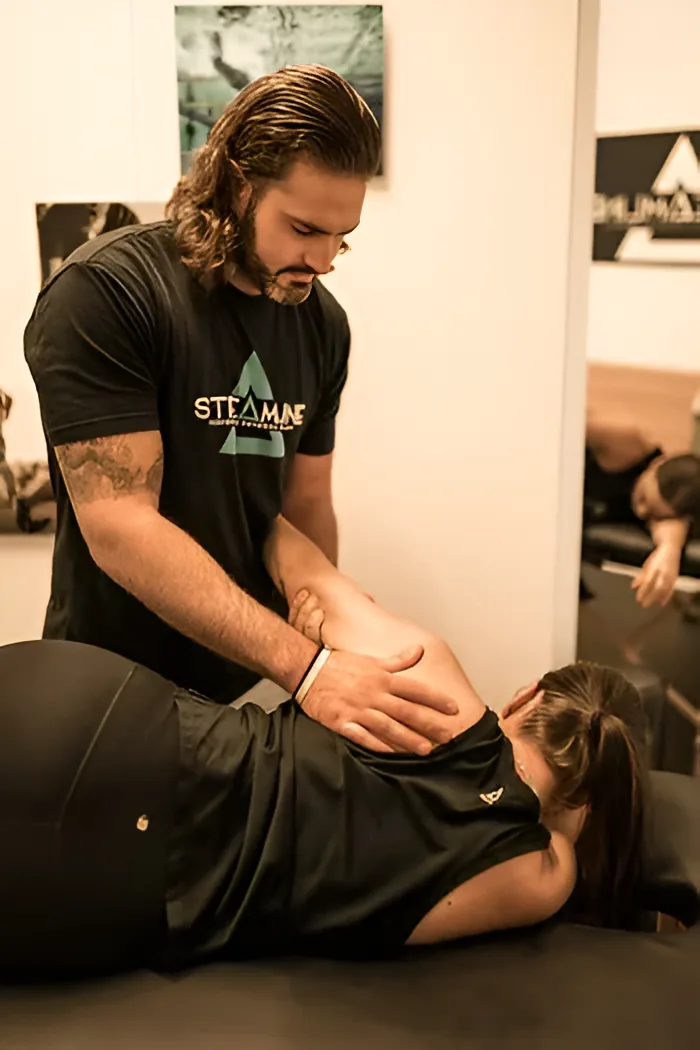
Screen first, then decide.
First we clear the history: bone health, vascular risk factors, recent trauma, progressive neurological signs. If any are present, the technique is off the table and we explain why.
Use the window it opens.
A responsive segment gives a short period of less guarding and more motion. We move straight into the range work that was blocked.
Load it so it does not need repeating.
Strength through the new range stops the segment stiffening again. Needing manipulation every visit means the plan needs changing.
Retire the technique.
By the last phase you should not need it. We retest and hand you a program that fits your week.
Start with the evaluation that decides whether this technique fits you at all.
Put it in writing.
Five short questions. A real person calls you back, usually within two business hours, with times that fit your week.
The people who end up filling this out are rarely in the worst pain of their life. They’re just done working around it, done picking the errand that doesn’t require the stairs. If that’s the stage you’re at, this is the part where you stop researching and start.
Consider it filed.
A real person will call you back, usually within two business hours, with appointment times that fit your week. Keep your phone nearby.
Can’t wait? Call (602) 755-3138 ⟶Easy to find. Easy to park.
In the neighborhood, with parking by the door. Come see the place before you commit, if you like.
The clinic · Streamline Performance Physical Therapy
Get Directions ⟶Opens in Google Maps