

Phoenix, AZ · The staff
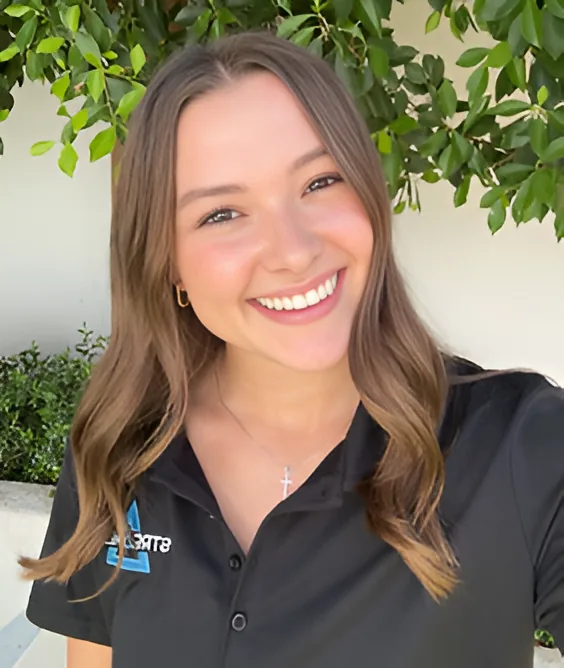
Gabby Foxworthy
She coaches strength and conditioning here and runs the front desk, so she is often both the person who checks you in and the person counting your reps an hour later.
Coached by somebody who won the thing.
Gabby Foxworthy trained under the pole vault gold medalist from the 2000 Olympic Games. That is an unusual line to find on a coaching resume, and a more useful one than it first sounds. Vaulting is not a strength sport in the way people assume. It is a sequencing sport: a run that has to arrive at exactly the right speed, a plant that has to happen in a window measured in fractions of a second, and a body that has to travel through a series of positions in an order it cannot improvise. Coaching that, and being coached at that level, is an education in watching movement closely enough to say which part went wrong.
That is what she brings to the training floor, which is a different job from shouting encouragement at somebody. Most sets are lost before the bar moves, in the setup, and most of what a good coach does is stop the rep that was going to go badly rather than praise the one that did not.
The strength work is the part people plan to do on their own and then quietly stop doing in week three. Having somebody who expects you on Thursday turns out to matter more than the program does.
She also runs reception, which gives her an unusual view of the place. She sees people on the first nervous phone call, then on the morning of the evaluation, then months later on the turf, still coming in. She is not a clinician and does not evaluate, diagnose or write plans of care. When something hurts rather than just feeling weak, she hands it to the clinical staff, which is a short walk in a building this size.
Two jobs, one building.
- Coaching strength. One-on-one and small group work on the training floor, coached rep by rep rather than counted.
- Watching movement. The habit that comes out of a technical sport: naming which part of a lift went wrong, not just that it did.
- The front desk. Checking people in, answering the phone, and keeping the schedule honest.
- The handoff. Passing anything that is pain rather than effort to the clinical staff instead of coaching through it.
Where the coaching sits in the plan.
Training runs alongside clinical care here. It does not stand in for it.
Personal training
The service she coaches inside: one-on-one strength work and the small group sessions.
02Sports injuries
If an athlete is hurt rather than untrained, that starts on the clinical side first.
03Request an appointment
The booking form, which lands at the front desk where she works.
The role, in plain terms.
Start with the evaluation. The training comes after.
Put it in writing.
Five short questions. A real person calls you back, usually within two business hours, with times that fit your week.
The people who end up filling this out are rarely in the worst pain of their life. They’re just done working around it, done picking the errand that doesn’t require the stairs. If that’s the stage you’re at, this is the part where you stop researching and start.
Consider it filed.
A real person will call you back, usually within two business hours, with appointment times that fit your week. Keep your phone nearby.
Can’t wait? Call (602) 755-3138 ⟶Easy to find. Easy to park.
In the neighborhood, with parking by the door. Come see the place before you commit, if you like.
The clinic · Streamline Performance Physical Therapy
Get Directions ⟶Opens in Google Maps