

Phoenix, AZ · Services
Active Release Technique in Phoenix
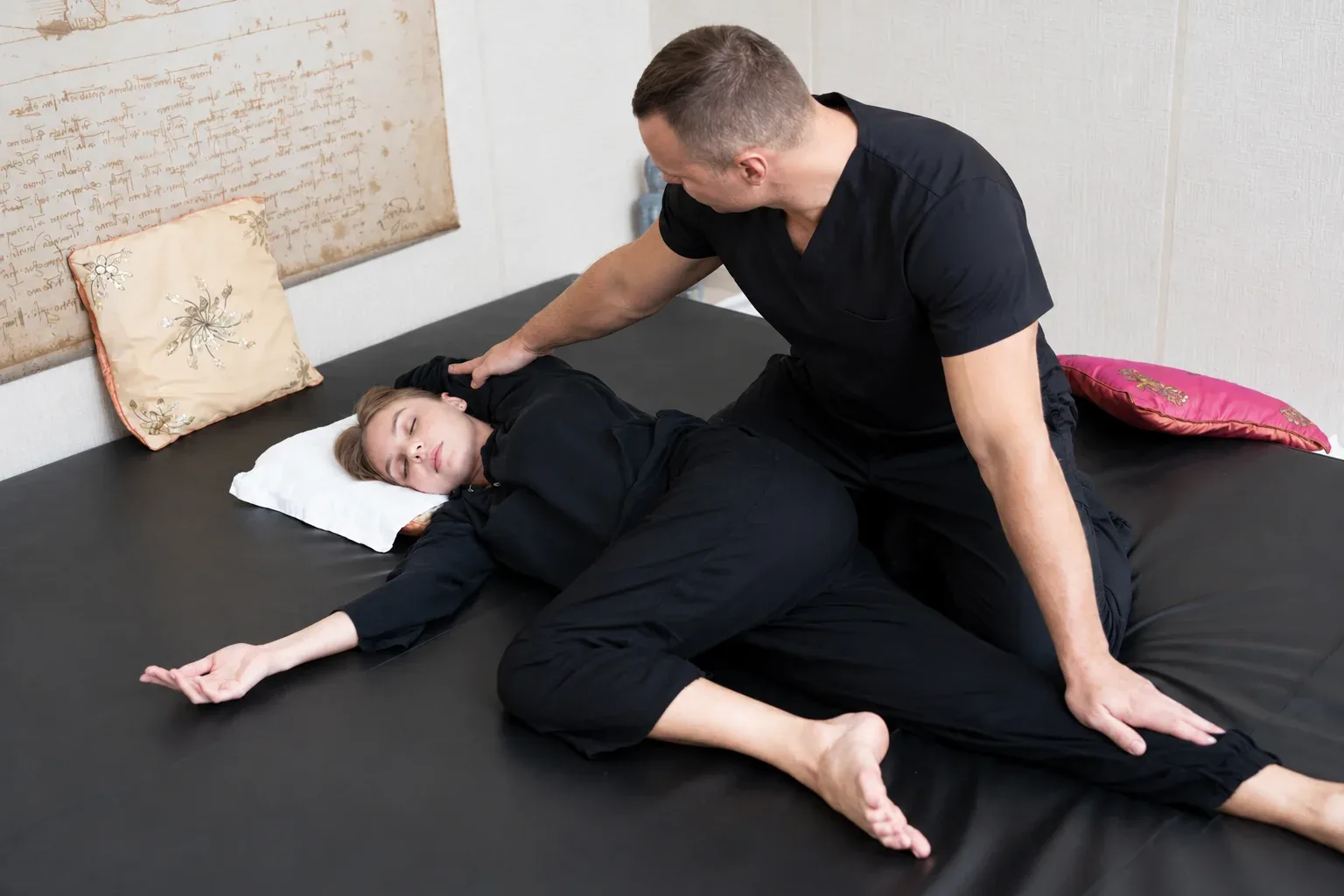
The key word is active: your clinician holds a specific contact with a thumb or hand while you move the arm or leg through its range yourself.
What is Active Release Technique in Phoenix?
Active Release Technique is hands only: no instrument and no lotion. The clinician holds a thumb, finger or heel of the hand on a precise spot with tension while you move the limb, so the tissue slides under the contact.
Because you are moving, treatment doubles as examination. The clinician feels exactly where in the arc the tissue stops gliding, and you add detail like “just past that” or “that is the one that stops me serving.”
Claims that it releases adhesions or frees trapped nerves overstate the evidence. What is defensible is that a specific contact with active movement reliably changes what people can do in the room. It earns its place on results.
What does an Active Release Technique session look like?
Expect instructions rather than lying still. The clinician settles a contact into one spot and says bend it slowly, reach across, or let the arm fall. It is a strong stretch with a point of pressure, lasting seconds per pass. There is no lotion, so normal clothing is fine if the area is reachable.
We keep asking whether the catch is still there, which is why it needs 60 minutes one-on-one with the same Doctor of Physical Therapy. The rest of the visit puts the new range under load so it survives the week.
Who this is for, and who it isn’t.
Good fit
- You can name the exact movement or part of a range that provokes it.
- Symptoms travel down a limb and change with how it is positioned.
- You would rather do something during treatment than lie still.
- Passive treatment elsewhere helped for a day at a time.
Not the right first stop
- Signs of a medical emergency: chest pain, sudden one-sided weakness, a limb gone cold or numb, or high fever with severe pain. Go to an emergency room.
- An area too irritable or recently injured to move through a range yet. We settle it down first and come back to this later.
Find the arc that catches.
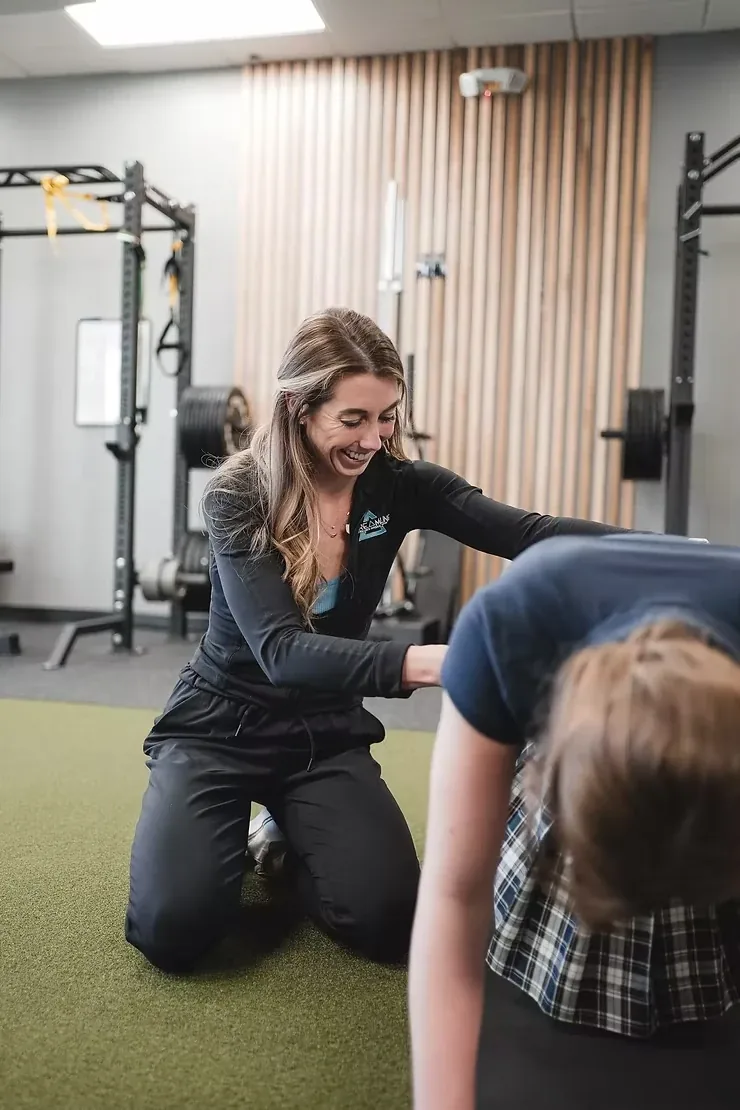
The evaluation looks for the point in a range where movement stops being smooth, because that is where the contact goes. The first passes are as much about locating that arc as changing it.
Hold the contact and let you move through it.
Tension is applied, you move through the range, and repetitions are few. When it works, the change shows up in the appointment: the reach goes further or the catch is gone.
Use the new range under load before you leave.
The new range is immediately given a job, with weight where appropriate. A range you own is one you can produce force in.
Keep the range with movement you will actually do.
Maintenance is movement, not more treatment. You leave with two or three exercises sized to your real week, and the hands come off well before the plan ends.
Start with the evaluation that watches you move before anything gets treated.
Put it in writing.
Five short questions. A real person calls you back, usually within two business hours, with times that fit your week.
The people who end up filling this out are rarely in the worst pain of their life. They’re just done working around it, done picking the errand that doesn’t require the stairs. If that’s the stage you’re at, this is the part where you stop researching and start.
Consider it filed.
A real person will call you back, usually within two business hours, with appointment times that fit your week. Keep your phone nearby.
Can’t wait? Call (602) 755-3138 ⟶Easy to find. Easy to park.
In the neighborhood, with parking by the door. Come see the place before you commit, if you like.
The clinic · Streamline Performance Physical Therapy
Get Directions ⟶Opens in Google Maps