
Phoenix, AZ · Services
Blood Flow Restriction Training in Phoenix
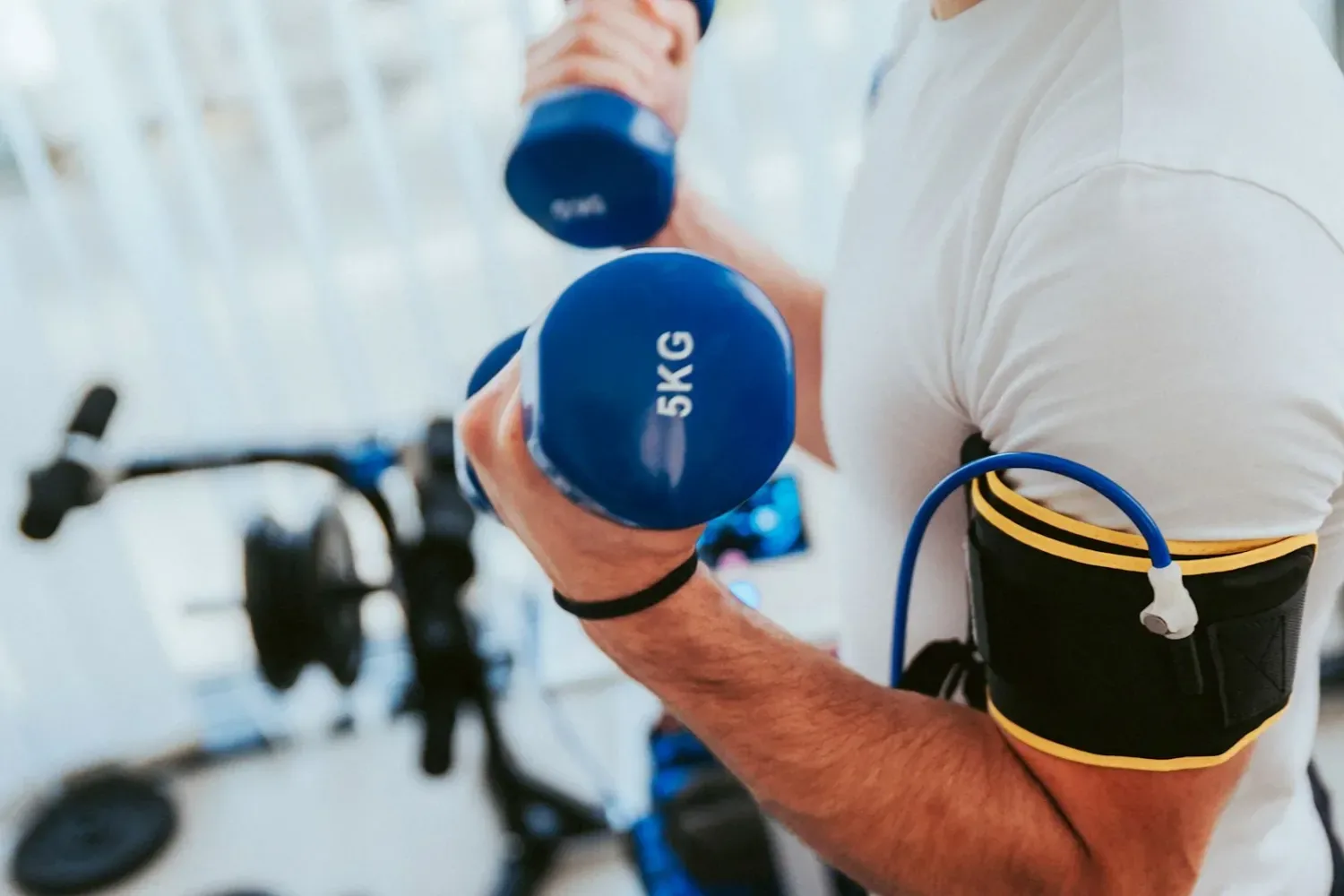
A calibrated cuff at the top of the arm or leg partially limits blood flow, so a very light weight produces the strength stimulus of a heavy one, when a healing joint or fresh repair cannot take heavy load.
What is blood flow restriction training in Phoenix?
Muscle grows from hard effort, usually heavy weight, which a recently operated knee, irritated shoulder or healing ankle cannot handle. A wide cuff at the top of the limb partially restricts flow out of it, so the muscle fatigues sooner and light repetitions register as a hard set.
Loads of twenty to thirty percent of your normal maximum start producing a real strength and size stimulus. A leg six weeks out from a repair or a shoulder that will not tolerate overhead load can be trained hard enough to stop shrinking.
Put plainly, it lets the Perform phase start earlier, closing most of the gap in which muscle would otherwise shrink. It does not replace heavy loading later; it protects muscle you would otherwise spend months rebuilding.
What does a blood flow restriction session look like?
It happens inside your 60-minute one-on-one visit. The cuff goes high on the thigh or upper arm at a pressure worked out from your own limb, and you do four sets of a light exercise with short rests, usually thirty repetitions then three sets of fifteen, while your clinician watches the readout.
Expect a burn, with the last set genuinely hard. It should never feel sharp, numb, tingly or cold; say so and the cuff comes off in seconds.
Who this is for, and who it isn’t.
Good fit
- You are recovering from surgery and the muscle around the protected joint is visibly shrinking.
- A joint flares whenever you lift anything meaningful, so strength work never starts.
- You are an athlete with a limb in a brace or on restrictions and want to be less far behind when they lift.
- You clear the screening of your medical history and medications before any cuff goes on.
Not the right first stop
- Anything acute and alarming: chest pain, a swollen, hot and painful limb, sudden shortness of breath, or spreading numbness. That needs urgent care or 911.
- A history of clotting, significant vascular or cardiac disease, uncontrolled blood pressure, sickle cell trait, lymphedema or lymph node removal on that side, or pregnancy. Bring your history and medication list so we can screen it first.
Screen first, then settle the joint.
Before any cuff goes on, we screen your medical history and medications. Then the early work is calming an irritated or post-surgical joint. The cuff waits until there is something worth loading.
Restore the motion the cuff work will need.
A limb needs usable range before it is worth fatiguing: full knee extension, enough shoulder rotation, an ankle that bends. This phase also measures your limb occlusion pressure, which makes the cuff equipment rather than a tourniquet.
Start building strength months before heavy load is allowed.
Light loads, high repetitions, short rests, four sets, cuff at your measured pressure. As tolerance improves, the cuff comes off and the plan hands over to conventional loading.
Take the cuff off and keep the strength.
The cuff is scaffolding, not the building. Once the joint tolerates real load, progressive strength work takes over, tested side to side.
Start with an evaluation that works out whether a cuff belongs in your plan.
Put it in writing.
Five short questions. A real person calls you back, usually within two business hours, with times that fit your week.
The people who end up filling this out are rarely in the worst pain of their life. They’re just done working around it, done picking the errand that doesn’t require the stairs. If that’s the stage you’re at, this is the part where you stop researching and start.
Consider it filed.
A real person will call you back, usually within two business hours, with appointment times that fit your week. Keep your phone nearby.
Can’t wait? Call (602) 755-3138 ⟶Easy to find. Easy to park.
In the neighborhood, with parking by the door. Come see the place before you commit, if you like.
The clinic · Streamline Performance Physical Therapy
Get Directions ⟶Opens in Google Maps