

Phoenix, AZ · What we treat
ACL Tear Recovery in Phoenix
Physical therapy does not knit a torn ligament back together. It prepares the knee for surgery, rebuilds strength and control afterwards, and holds you to a return-to-sport standard, not a calendar date.
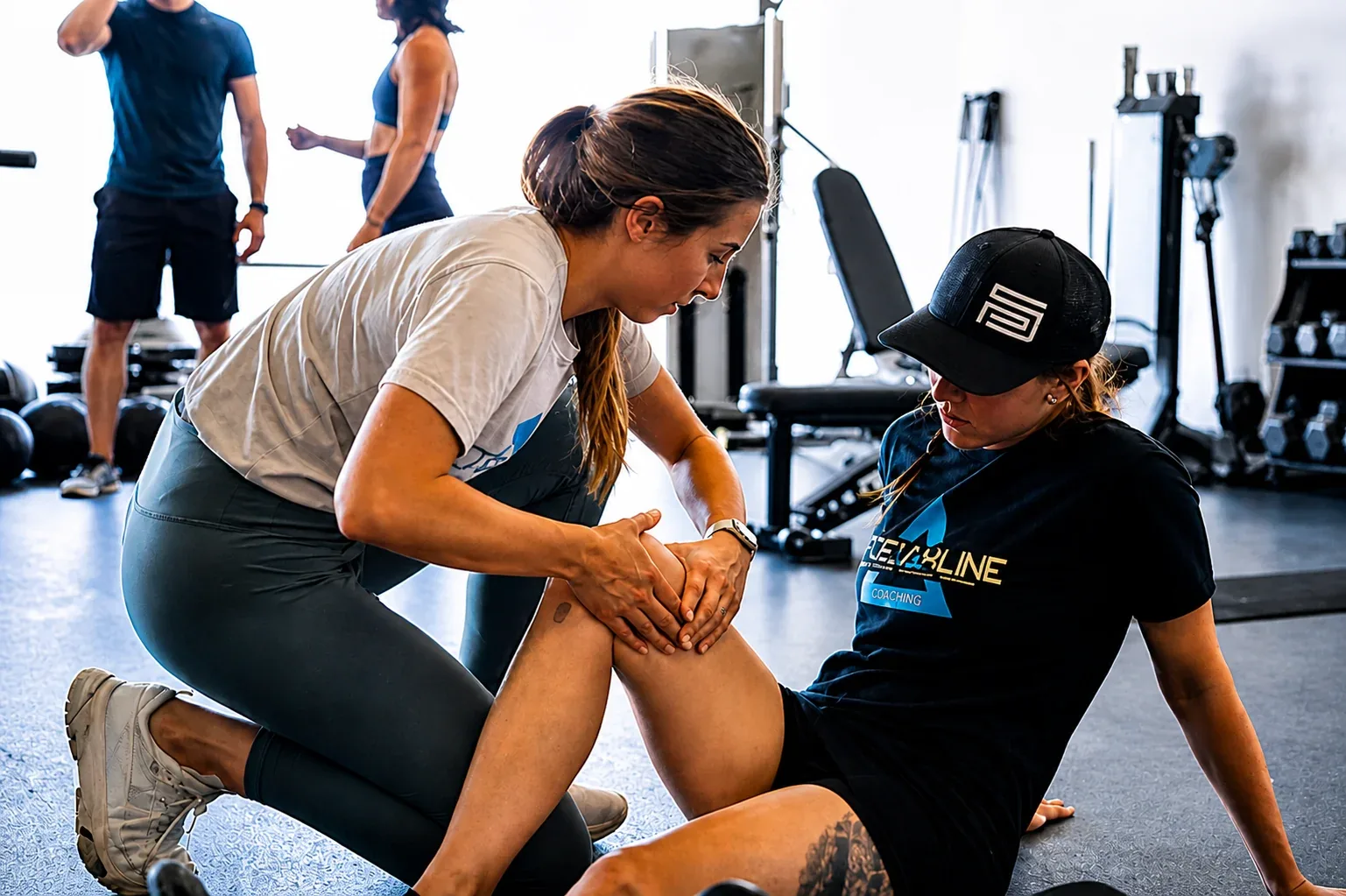
Why does an ACL tear happen?
The ACL stops the shin sliding forward and the leg rotating out from under you. It fails when it is asked to do a job the surrounding muscles should have been doing.
- The non-contact pivot. Most tears are non-contact: the foot plants, the body keeps turning, and the ligament takes a rotation the hip and thigh should have absorbed, in about a tenth of a second.
- A stiff landing. Landing from a jump with the leg nearly straight sends force into the joint instead of the muscle. Soft landing is trainable, one of the first things we test and the last we sign off.
- Hip and trunk control that fades late. The knee collapsing inward on a single-leg landing is usually a hip and trunk problem, and it tends to appear late in a game, when fatigue makes it expensive.
- Load that arrived faster than the tissue was ready for. A preseason from nothing to twice a day, a first tournament after months off, a new sport stacked on the old one. Injuries cluster at load spikes.
- An earlier injury that was rehabbed to comfortable rather than to a standard. An old ankle sprain or strain on the same side that stopped hurting, and stopped getting attention, leaves a leg that moves differently under pressure: a real risk factor few people have measured.
Not a lecture about the past: these are the qualities rehabilitation spends its middle months building, because surgery replaces the tissue without teaching the leg to use it.
How an ACL tear gets described out loud.
-
Usuallythe tear is one loud moment. The disconnected feeling afterwards is the quadriceps switching off around a joint it no longer trusts, and reversing that is rehabilitation’s first job.
Why does this happen ⟶ -
Usuallyswelling settles in weeks; strength does not. A calm joint on top of a visibly smaller thigh is a long way from ready, and the gap is measurable.
Why does this happen ⟶ -
Usuallystraight-line running asks little of the ACL. Cutting, pivoting and landing ask everything of it, so instability first shows up in a change of direction.
Why does this happen ⟶
People who do well here want to know what the plan measures, prefer hard numbers, and will do the boring month that makes the interesting work possible.
How do we treat an ACL tear in Phoenix?
It starts with a one-on-one evaluation with a Doctor of Physical Therapy and one question: which road are you on? Surgery scheduled, waiting on a consult, managing without an operation, a knee that gives way, swelling long after reconstruction, or a revision. Functional testing and a biomechanical assessment show what feeds the instability.
Before surgery, four or five sessions to get the knee straight, calm and with a working quadriceps pay off afterwards. After surgery the work is long and graded: 60 minutes one-on-one with the same doctor, two to three visits a week at first, tapering as you take over. The endpoint is a set of standards, not a date.
What does getting better look like?
Better is measured, not felt. Early: the leg straightens fully and the thigh fires. Middle months: you load one leg without the knee feeling like a negotiation. Later: you hop, land and cut on the surgical side with numbers close to the other leg.
Around month three or four, you often feel fine while testing says otherwise. That gap is the most dangerous part, and why the plan runs on measurements.
Left half-finished, the leg keeps a hidden strength deficit, the other side overworks, and the knee gets avoided rather than used. A knee that keeps shifting also wears faster, raising the odds of arthritis and chronic pain.
The plan ends with evidence: you see the numbers, what changed and what did not, and leave with a program that fits the week you actually have.
Calm the joint and wake the thigh back up.
Swelling control, full knee straightening, and getting the quadriceps to contract on demand. Hands-on treatment starts at the evaluation. Unglamorous, and it decides how the next four months go.
Restore what the joint has stopped doing.
Full extension kept, bend restored on schedule, hip and ankle mobility freed, scar and soft tissue work where motion is limited, and single-leg balance rebuilt before loading.
Load it until the two sides match.
Progressive strength for the thigh, hamstrings, glutes and calf, then hopping, then cutting. Blood flow restriction helps early, when the joint tolerates far less weight than the muscle needs. You progress by strength standard, not week number.
Test it, then keep it.
Side-to-side strength, hop and landing tests before any return-to-sport date, then a maintenance program for your training week, because risk rises again in year two. Without surgery, that includes monitoring and periodic tune-ups.
Start with a cause-first evaluation of your ACL.
Put it in writing.
Five short questions. A real person calls you back, usually within two business hours, with times that fit your week.
The people who end up filling this out are rarely in the worst pain of their life. They’re just done working around it, done picking the errand that doesn’t require the stairs. If that’s the stage you’re at, this is the part where you stop researching and start.
Consider it filed.
A real person will call you back, usually within two business hours, with appointment times that fit your week. Keep your phone nearby.
Can’t wait? Call (602) 755-3138 ⟶Easy to find. Easy to park.
In the neighborhood, with parking by the door. Come see the place before you commit, if you like.
The clinic · Streamline Performance Physical Therapy
Get Directions ⟶Opens in Google Maps