

Phoenix, AZ · Services
Cupping in Phoenix
Most hands-on techniques press into tissue. Cupping pulls, lifting skin and the layers beneath it apart to free restrictions pressure has not moved.
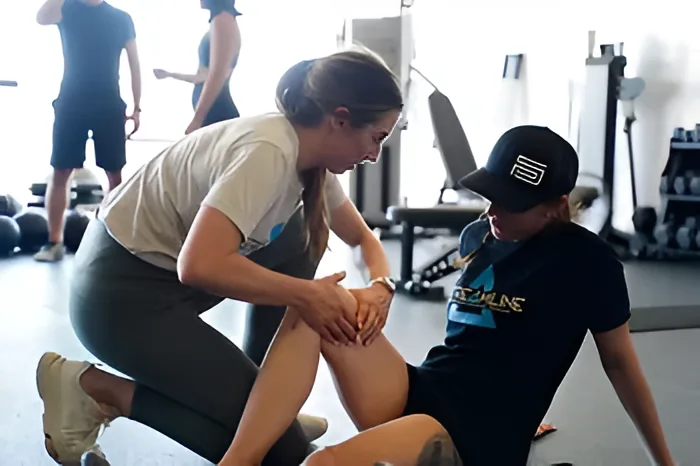
What is cupping in Phoenix?
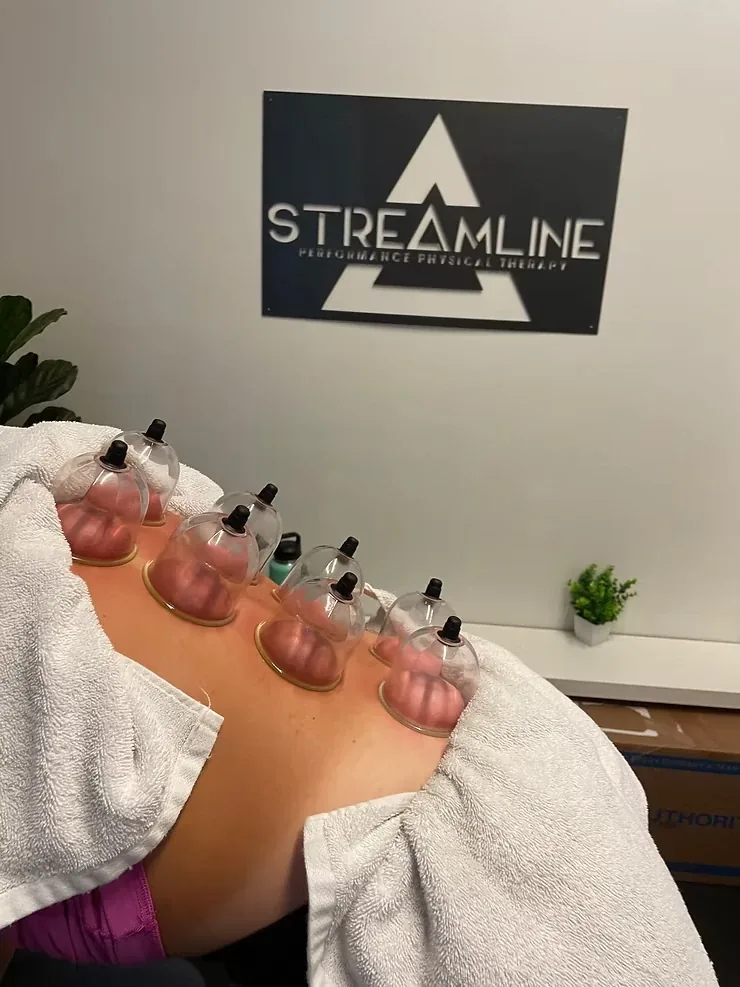
Cupping is decompression. A sealed cup draws skin, fascia and the top of the muscle upward instead of pushing them down. Where those layers have stuck together and stopped sliding, the lift creates space between them.
Cups can sit still over a restriction (the version that leaves round marks) or glide along the tissue, which marks far less. Often you move the joint with the cups on, because a restriction that shows up in motion is best treated in motion.
It is one technique among many, used when the evaluation finds a restriction that responds to it. The strength work that follows in the same hour is what makes the change last.
What does a cupping session look like?
There is no separate cupping appointment. Part of a 60-minute one-on-one visit with a Doctor of Physical Therapy may be spent with cups on the region the evaluation identified, left still for a few minutes or glided along the tissue. It feels like a firm, steady pull. It should not hurt, and the suction is adjusted if it does.
You may be asked to move with the cups on: raising the arm, turning the head, hinging at the hip. Then the new range is tested and loaded. Ten to fifteen minutes is a typical share of the hour.
Who this is for, and who it isn’t.
Good fit
- You have a region too irritable for direct pressure that clearly needs work.
- You lose range in one direction, and it returns briefly after hands-on work, then goes again.
- You train hard and one area accumulates restriction faster than it clears.
- You are already in a plan here and your therapist has found a tissue layer that will not glide.
Not the right first stop
- Anything acute and medical: chest pain, a suspected clot, a new hot and swollen calf, unexplained fever, or a fresh significant injury. See a physician or emergency room today.
- Anyone who wants it as a standalone standing appointment. On its own, the result lasts days rather than months.
Take the guarding down.
Early on, cups are used over a region too irritable for direct pressure. Decompression is often better tolerated, and it makes the rest of the visit possible.
Free the layer that will not slide.
A restriction between skin, fascia and muscle is lifted apart, usually while the joint moves, and the new motion is rehearsed before you leave.
Load the range you just gained.
As soon as the restriction gives, the new range is loaded. Strength there is what makes the body keep it.
Stop needing it.
By the end of a plan, cupping should have largely dropped out. If a region still needs it every fortnight, something upstream has not been addressed.
“They work with you one on one for the full hour and never leave your side. Cupping, dry needling, and their fitness programs have helped me so much. Every physical therapist there is wonderful and all on the same page in their approach, which makes such a difference.”Amanda P. · patient testimonial
Start with a cause-first evaluation, then the right tool for it.
Put it in writing.
Five short questions. A real person calls you back, usually within two business hours, with times that fit your week.
The people who end up filling this out are rarely in the worst pain of their life. They’re just done working around it, done picking the errand that doesn’t require the stairs. If that’s the stage you’re at, this is the part where you stop researching and start.
Consider it filed.
A real person will call you back, usually within two business hours, with appointment times that fit your week. Keep your phone nearby.
Can’t wait? Call (602) 755-3138 ⟶Easy to find. Easy to park.
In the neighborhood, with parking by the door. Come see the place before you commit, if you like.
The clinic · Streamline Performance Physical Therapy
Get Directions ⟶Opens in Google Maps