
Phoenix, AZ · The staff
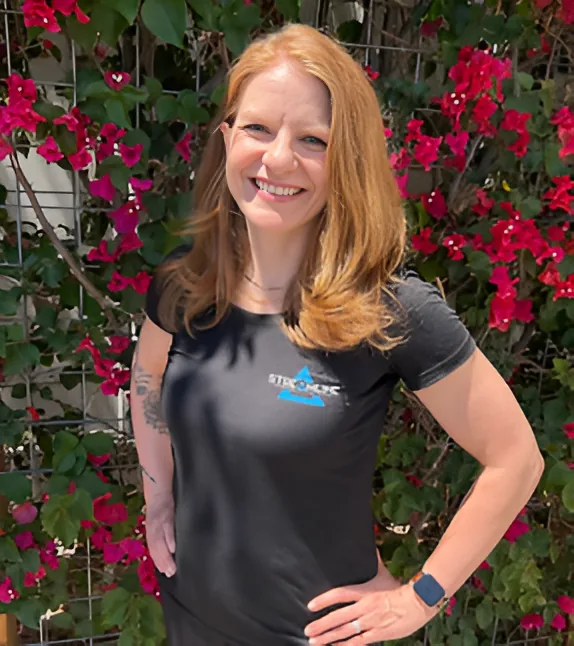
Rachel Reidy
She is the Licensed Massage Therapist here, certified in orthopedic massage, which is the version aimed at one structure that is not behaving rather than at a general hour of quiet.
Orthopedic massage is a different assignment.
Rachel Reidy has fifteen years of practice behind her and a certification in orthopedic massage. The distinction matters more than the name suggests. A relaxation massage is organised around the whole body and around how the hour feels. An orthopedic session is organised around a structure: this calf, this band of the upper trapezius, this length of tissue along the side of the hip that has been guarding something for a month. The intake question is not where you would like her to work. It is what stopped working, and when.
That is also why the work sits so close to the clinical side of the building. When someone is partway through a plan of care, the tissue around the joint has usually spent weeks protecting it, and protection is stiff. Loosening that tissue does not fix the cause, and she will say so, but it gives the range back for long enough that the strength work in the plan has somewhere to go. Range that gets used tends to stay. Range that gets released and then sat on does not.
Plenty of people book massage for the hour of quiet and get exactly that, which is fine. The ones who book it a second time usually noticed that something specific moved better afterward, and they want that back.
Fifteen years also buys a particular kind of hands. Most of what she finds is found by touch: the piece of tissue that is denser than its neighbours, the spot the patient flinches at half a second before they say anything, the difference between a muscle that is tight and a muscle that is bracing. Sessions are private, unhurried, and the pressure is checked as it goes rather than assumed.
What an orthopedic massage session involves.
- A specific target. The session is built around the structure that is causing trouble rather than a standard full-body route.
- Work by feel. Finding the tissue that is dense, guarding, or restricted, and treating that rather than the map.
- Pressure you agree with. Checked as the session runs. Deep is a tool, not a grade.
- Handed back to the plan. For patients in a plan of care, what she finds goes back to the clinical staff treating them.
What massage therapy pairs with.
It is a tool inside a plan for people already in one, and a standalone session for people who are not.
Massage therapy
The service itself: what a session covers, how long it runs, and how to book one.
02Neck pain
Necks that stiffen around a desk, and the upper back that is almost always part of the story.
03Low back pain
Tissue around a back that has been guarding for weeks, which is stiff for a reason worth understanding.
04Headaches
Headaches with a neck and shoulder component, where soft tissue work is genuinely part of the answer.
The role, in plain terms.
Book a session, or start with the evaluation.
Put it in writing.
Five short questions. A real person calls you back, usually within two business hours, with times that fit your week.
The people who end up filling this out are rarely in the worst pain of their life. They’re just done working around it, done picking the errand that doesn’t require the stairs. If that’s the stage you’re at, this is the part where you stop researching and start.
Consider it filed.
A real person will call you back, usually within two business hours, with appointment times that fit your week. Keep your phone nearby.
Can’t wait? Call (602) 755-3138 ⟶Easy to find. Easy to park.
In the neighborhood, with parking by the door. Come see the place before you commit, if you like.
The clinic · Streamline Performance Physical Therapy
Get Directions ⟶Opens in Google Maps