
Phoenix, AZ · Services
Car Accident Rehab in Phoenix
A crash loads the neck and spine faster than muscle can brace, and the injured tissue often stays quiet for two or three days, so feeling fine at the scene proves little.

What is car accident rehab in Phoenix?
The head weighs about as much as a bowling ball and sits on small joints built for control, not impact. A crash accelerates and stops it faster than any muscle can protect it. The result is usually a spread of small strains and irritated joints across the neck, upper back and jaw, plus a guarded nervous system.
The evaluation works out what is hurt and what is guarding, and screens for anything that belongs with a physician: headache with light sensitivity, lingering fogginess, pins and needles into a hand, dizziness on turning.
Then hands-on work settles the joints and muscle that took the load, restores rotation and extension, and rebuilds deep neck and upper back strength so it does not recur.
What does a car accident rehab session look like?
The first visit is mostly questions and hands: direction of impact, where your head was turned, airbags, any imaging. Then an exam of the neck, upper back, jaw and shoulders and a screen for anything that needs a physician, with a clear referral if it is positive.
Treatment starts the same day with hands-on work and two or three movements to do often. Later visits shift from settling to loading and strength for a full working day, always 60 minutes one-on-one with the same Doctor of Physical Therapy.
Who this is for, and who it isn’t.
Good fit
- You felt fine at the scene, and neck stiffness, headache or upper back ache arrived a day or three later.
- You have been medically cleared and want the stiffness, rotation and headaches treated.
- Reversing, checking a blind spot or sitting through a working day has become the problem.
- You want the jaw, neck, upper back and headaches assessed as one pattern.
Not the right first stop
- Anything acute and alarming: loss of consciousness, worsening or unrelenting headache, repeated vomiting, spreading weakness or numbness, trouble speaking or seeing, or escalating pain. Call 911 or go to an emergency department now.
- Anyone not yet medically evaluated after a significant collision, or told to wait on imaging or a specialist. Get that answer first; the plan will be better for it.
Settle a neck that is guarding everything.
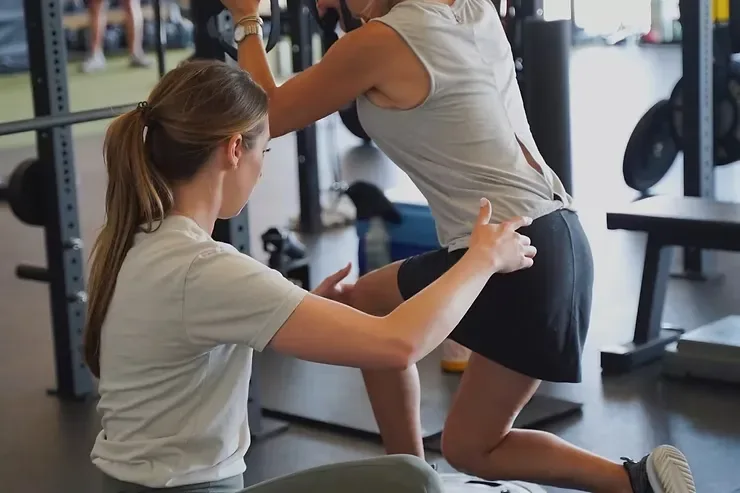
In the first week, almost everything hurts because everything is bracing. Gentle joint and soft tissue work through the neck, upper back and jaw, plus a few movements to do often, because necks held still do worse.
Get the rotation and extension back.
Checking a blind spot or tipping the head back at the sink: these ranges go first and do not return on their own. This phase works the stiff segments, frees the upper back and ribs, and settles headaches from the top joints.
Build the strength that holds the head up all day.
The deep front-of-neck muscles and those between the shoulder blades switch off after a crash until trained. Progressive loading, plus a deliberate return to driving and lifting.
Make sure it does not come back at month six.
Testing before discharge, a short program for your real week, and the early warning signs, because people who relapse usually stopped the day the pain did.
Start with a cause-first evaluation of the neck that took the impact.
Put it in writing.
Five short questions. A real person calls you back, usually within two business hours, with times that fit your week.
The people who end up filling this out are rarely in the worst pain of their life. They’re just done working around it, done picking the errand that doesn’t require the stairs. If that’s the stage you’re at, this is the part where you stop researching and start.
Consider it filed.
A real person will call you back, usually within two business hours, with appointment times that fit your week. Keep your phone nearby.
Can’t wait? Call (602) 755-3138 ⟶Easy to find. Easy to park.
In the neighborhood, with parking by the door. Come see the place before you commit, if you like.
The clinic · Streamline Performance Physical Therapy
Get Directions ⟶Opens in Google Maps