Phoenix, AZ · Services
Graston Technique in Phoenix
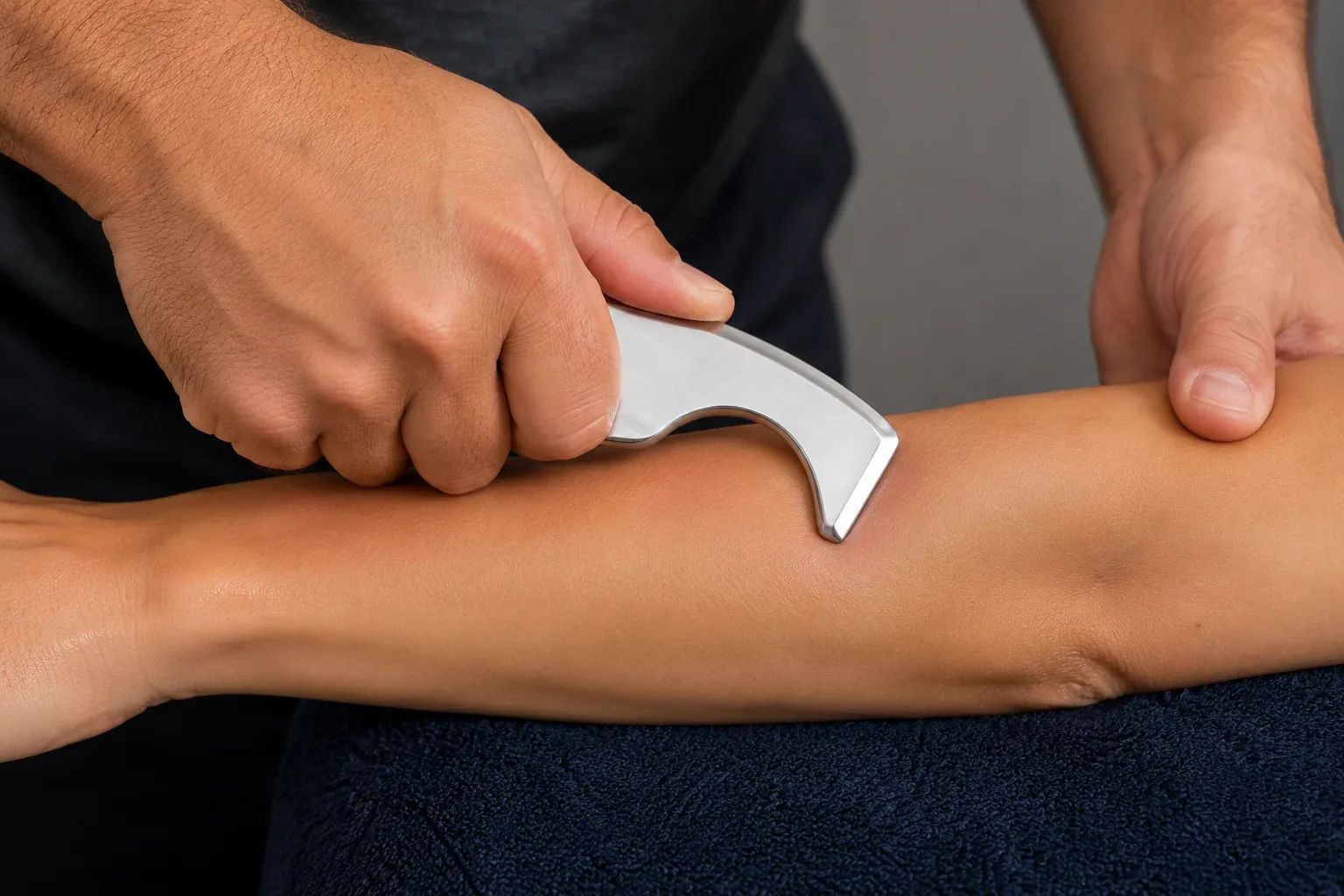
Graston uses stainless steel tools cut to different shapes: one for the flat of a shin, one for the hollow behind a knee, one small enough to trace the edge of a wrist. Matching the shape to the area is most of what makes it work.
What is the Graston Technique in Phoenix?
Graston Technique is a certified system of instrument-assisted soft tissue work. A long convex tool sweeps a quadriceps or calf, a curved one sits behind a knee or elbow, and a small bevelled one traces a wrist extensor or Achilles where a thumb cannot reach. The wrong shape pressed harder is how the technique gets a bad name.
The steel also works as a listening device: as it travels, the clinician feels the texture turn grainy, locating the area that is actually behaving differently, often a hand-width from where you point. Treatment starts once that map exists.
The claim that it breaks down scar tissue and adhesions is not proven. What holds up is that people commonly move further and hurt less afterwards, likely because skin and fascia respond to firm, directional pressure.
What does a Graston Technique session look like?
A little emollient lets the steel glide. A broad tool sweeps the region to find where the feedback changes, and the clinician checks whether a rough spot is where you feel it. A better-fitting tool then makes shorter, specific passes. It feels firm, not sharp.
The steel is out for a small part of the visit. The rest of the 60 minutes goes to stretching into the new range, strengthening the treated tissue, and setting your home program. Expect pinkness for a few hours, and wear clothing that gives access to the area.
Who this is for, and who it isn’t.
Good fit
- A sore, shallow, well-defined area such as an outer elbow, Achilles, or heel that has grumbled for weeks.
- Hands-on treatment helped a little and you want something that finds the border more precisely.
- You are comfortable with firm pressure and some pinkness for the rest of the day.
- You want it inside a plan with a named endpoint, not an open-ended series.
Not the right first stop
- Signs of a medical emergency, such as chest pain, sudden one-sided weakness, a cold or numb limb, or high fever with severe pain. Go to an emergency room.
- Broken, infected, or badly sunburned skin, a fresh surgical wound, or a recent fracture. Certain blood thinners and clotting conditions also rule it out, and we treat the area another way.
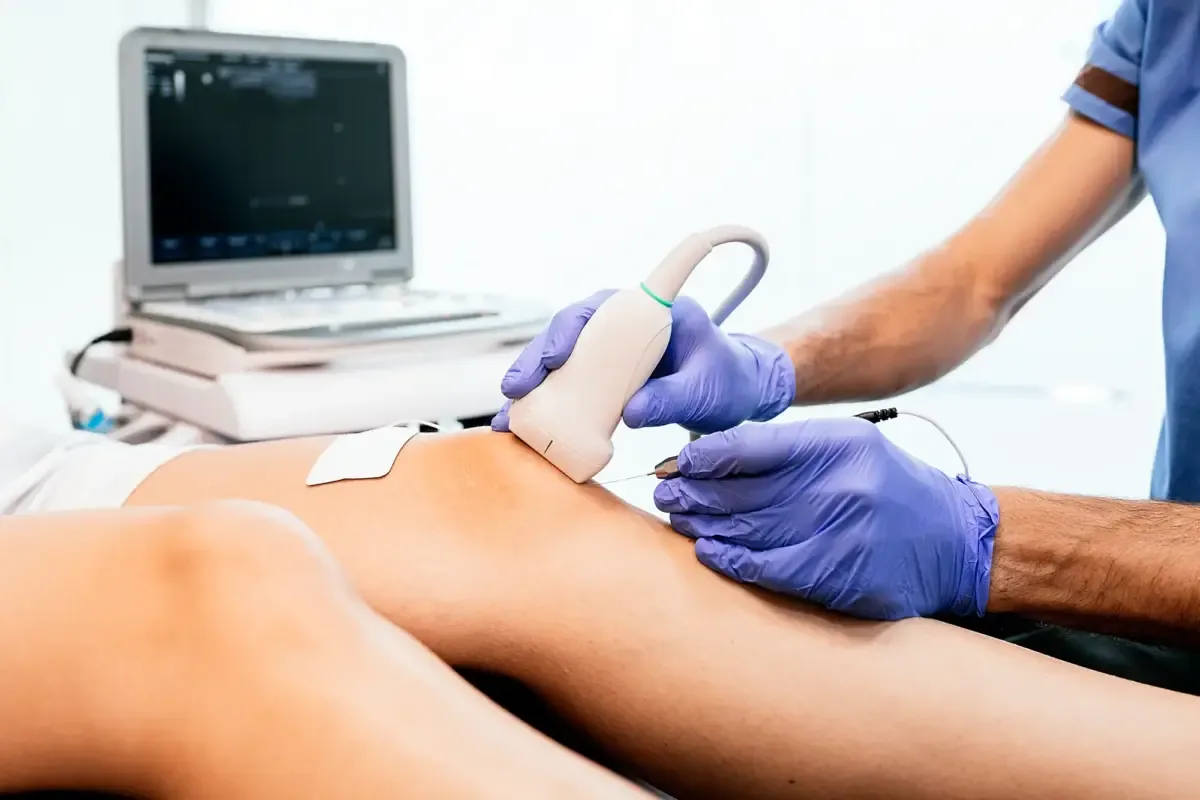
Map it before touching it with steel.
Hands first, then the instrument whose shape matches the contour. On an irritable area, the first pass is lighter and shorter than you might expect.
Work the specific border, not the whole limb.
The instrument follows the border the mapping found, in the direction that produced change. Any range that opens up gets used in the same appointment.
Put weight through the area that just got attention.
Loading follows in the same visit, aimed at the treated tissue. Tolerating more this week than last decides when you progress.
Stop reaching for the tray.
The instruments fade out as loading takes over. You leave with a program sized to your week and the endpoint named at the evaluation.
Start with the evaluation that finds the border before anything touches it.
Put it in writing.
Five short questions. A real person calls you back, usually within two business hours, with times that fit your week.
The people who end up filling this out are rarely in the worst pain of their life. They’re just done working around it, done picking the errand that doesn’t require the stairs. If that’s the stage you’re at, this is the part where you stop researching and start.
Consider it filed.
A real person will call you back, usually within two business hours, with appointment times that fit your week. Keep your phone nearby.
Can’t wait? Call (602) 755-3138 ⟶Easy to find. Easy to park.
In the neighborhood, with parking by the door. Come see the place before you commit, if you like.
The clinic · Streamline Performance Physical Therapy
Get Directions ⟶Opens in Google Maps